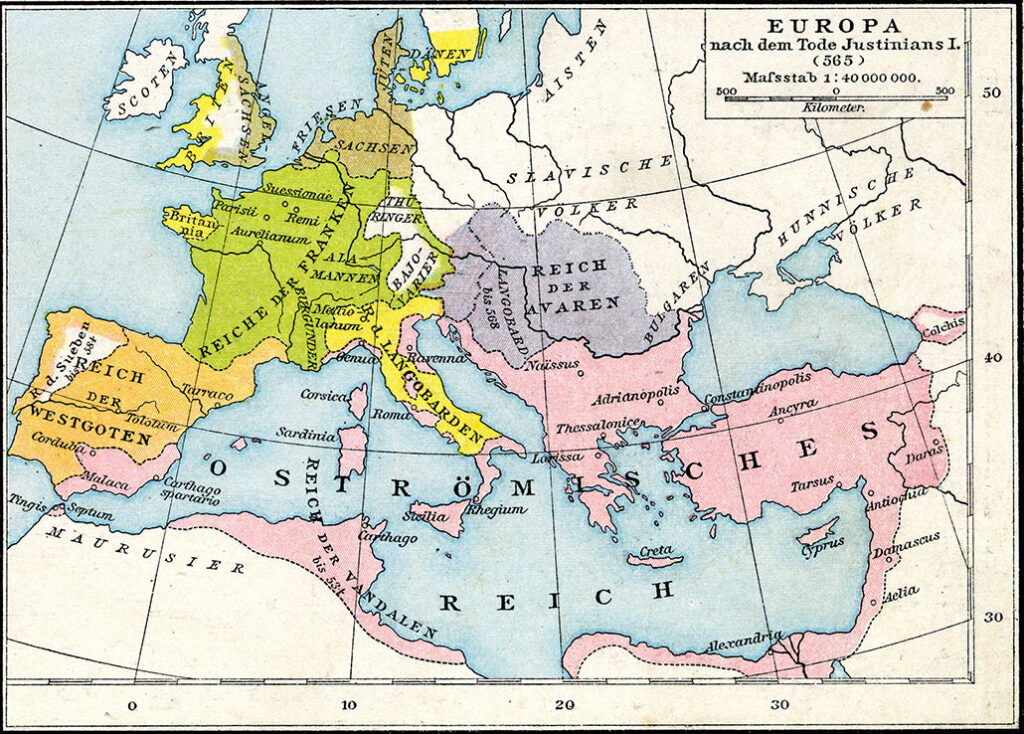
Emperor Justinian the Great had an enormous impact on Western civilization, although his legacy includes both major achievements and costly failures. From Constantinople, formerly Byzantium, Justinian attempted to rebuild the old Roman Empire by reconquering North Africa, parts of Spain, and most of Italy. These victories briefly restored Roman control in the western Mediterranean, but the wars were expensive and left some regions damaged and difficult to defend (5 Minutes, 2022).
“Justinian attempted to restore Roman territory, but his most lasting influence may be found in law and architecture”
(5 Minutes 2022; TRT World 2020)
Constantinople was one of the Eastern Empire’s greatest strengths. Positioned between Europe and Asia near the Bosphorus Strait, the city became an important center for trade, government, and cultural exchange. Its strong defensive position also helped the Byzantine Empire survive long after the western Roman Empire collapsed.
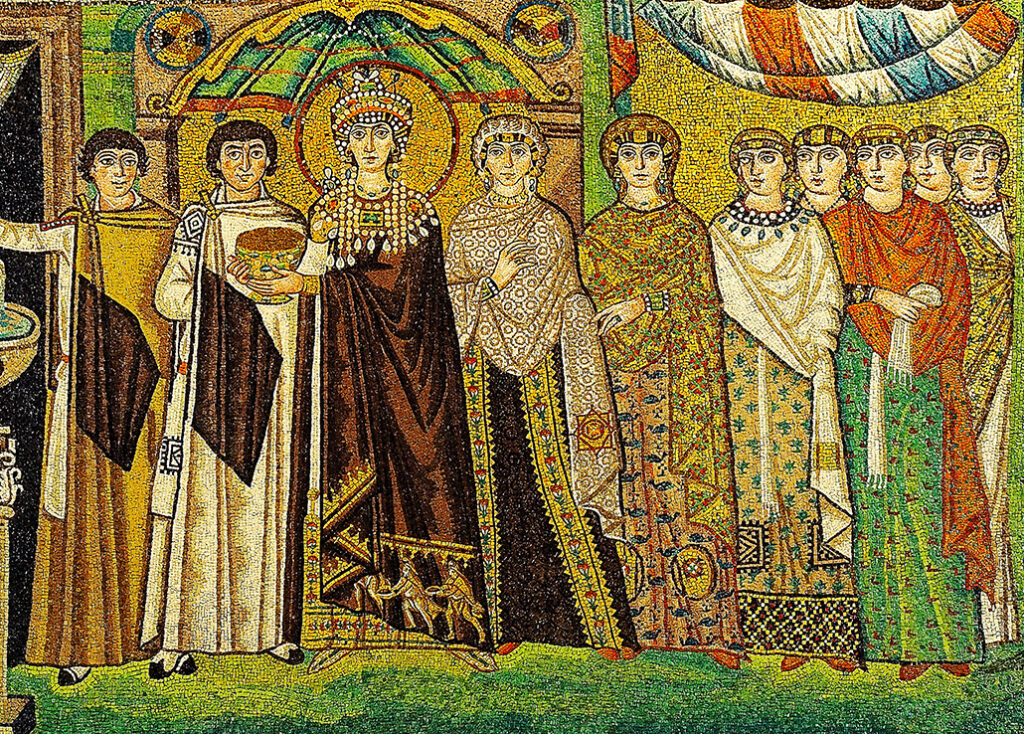
Arguably, Justinian’s most lasting political achievement was the Justinian Code, which organized Roman laws into a more consistent legal system. This code influenced legal traditions throughout medieval Europe and remains part of the foundation of modern civil law (5 Minutes, 2022). His wife, Theodora, also influenced government policies, including reforms that provided greater protection for women.
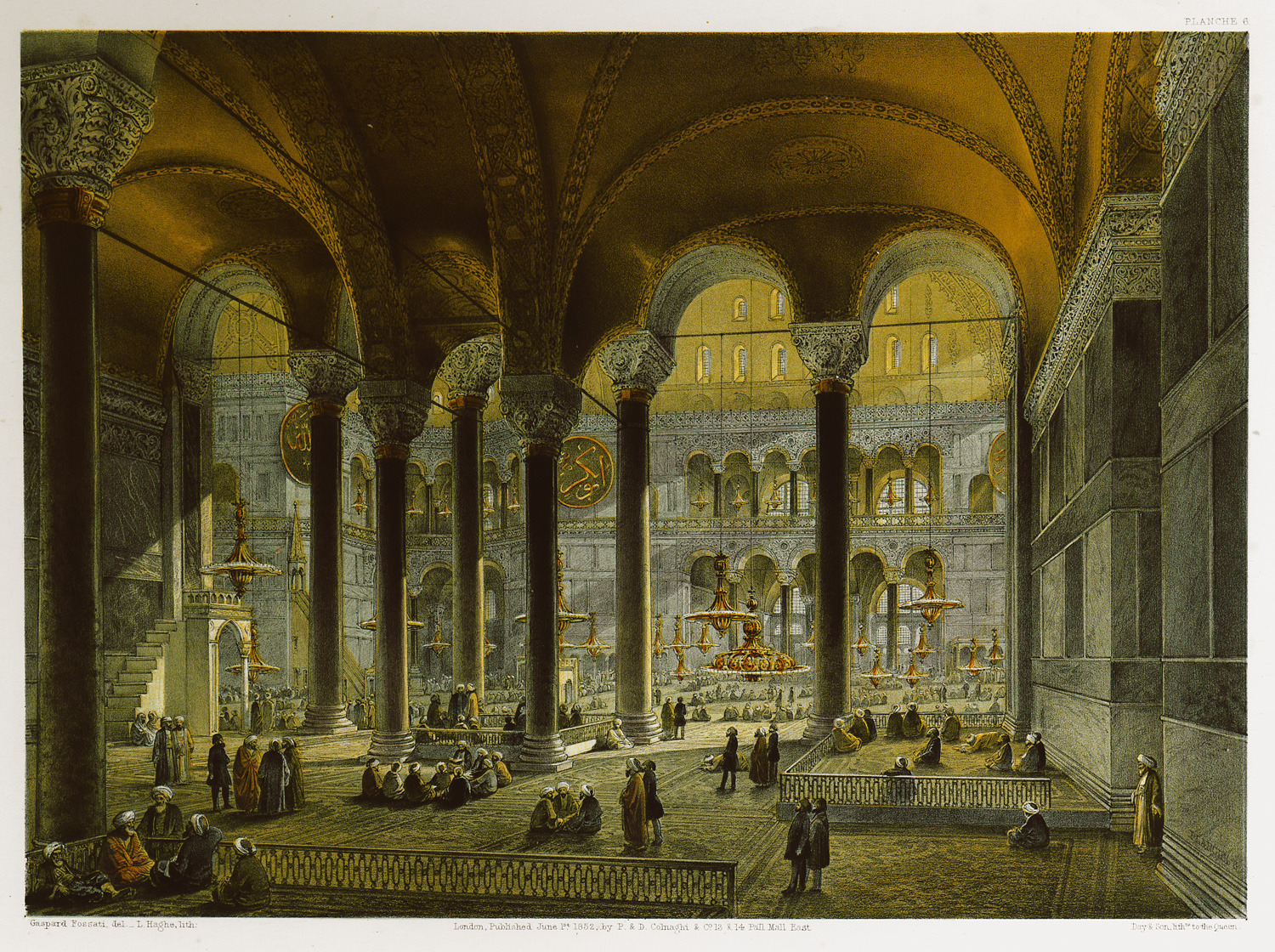
Architecturally, Justinian’s greatest accomplishment was the Hagia Sophia. Completed in 537, its enormous dome, marble interior, and detailed mosaics demonstrated the empire’s wealth and engineering skill. It remained the world’s largest church for nearly one thousand years (TRT World, 2020).
Overall, I believe Justinian strengthened Western civilization through law, architecture, and the preservation of Roman traditions. However, his military ambitions placed tremendous financial pressure on the empire.
Sources
5 Minutes. “Brief History of the Byzantine Empire.” YouTube video, January 15, 2022. Link
Droysen, Gustav, and Richard Andrée. 1886. “Europe at the Death of Justinian I in 565.” Revised by G. Kossina. Wikimedia Commons. Link

Fossati, Gaspare. 1852. “View of the Central Nave of Hagia Sophia in Istanbul, from the North Nave.” Wikimedia Commons. Link

Milošević, Petar. 2015. “Mosaic of Theodora—Basilica San Vitale, Ravenna, Italy.” Wikimedia Commons. Link
.jpg)
TRT World. “Hagia Sophia: Through the Ages.” YouTube video, July 10, 2020. Link