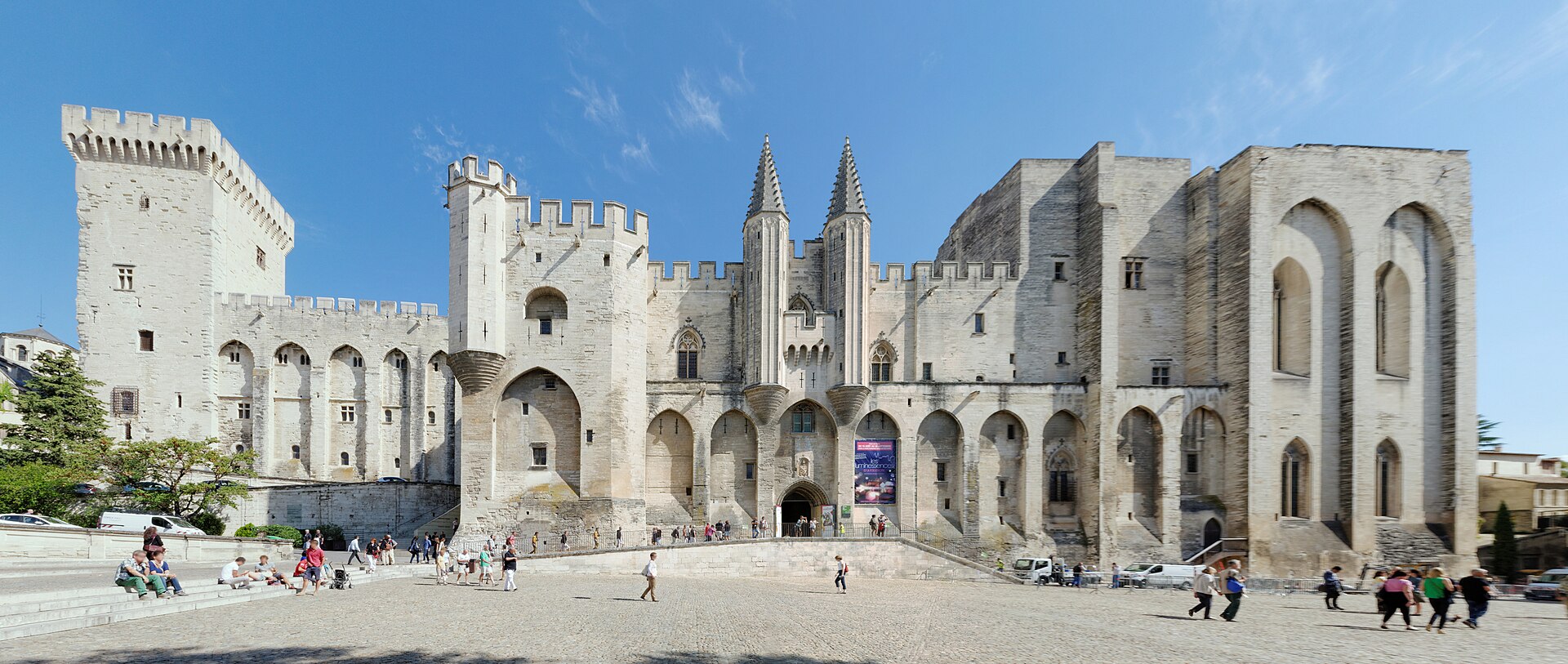
The “Babylonian Captivity” of the papacy began in 1309, when Pope Clement V moved the papal court from Rome to Avignon. Political conflict in Rome and pressure from the French monarchy influenced the move, but it made the pope appear too closely tied to France (Rollo-Koster 2023). The Palace of the Popes in the image above also shows how wealthy and politically powerful the papacy became during this period.
“I am now living in France, in the Babylon of the West.”
—Francesco Petrarch
Many Christians believed this wealth ran counter to the Church’s spiritual purpose. Petrarch called Avignon the “Babylon of the West” and criticized Church leaders for their gold, luxury, and expensive lifestyles instead of following the humble example of Christ’s apostles (Petrarch 1907).
The Western Schism began after the papacy returned to Rome. Following a disputed election, one pope ruled from Rome while another established his court in Avignon. European rulers chose sides largely based on political interests, and a failed attempt to resolve the conflict ultimately led to the creation of a third pope. The Council of Constance finally reunited the Church under Pope Martin V in 1417 (Rollo-Koster 2023).
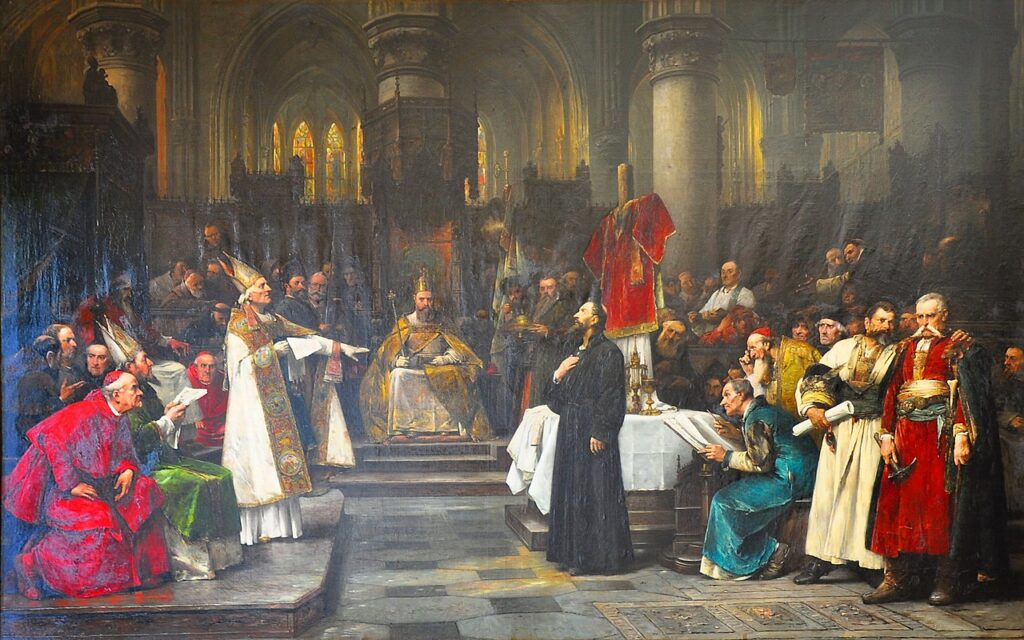
Václav Brožík’s 1883 painting shows the reformer Jan Hus appearing before the Council of Constance. The council helped end the Western Schism, but it also condemned Hus for challenging Church authority.
This crisis was different from the Great Schism of 1054, which divided the Roman Catholic and Eastern Orthodox churches because of political, cultural, theological, and leadership disputes (TheoEngage-Christianity 2022). I think both schisms show what can happen when religious authority becomes mixed with politics and personal power. The lasting consequence was weakened trust, a problem institutions still face today when their leaders seem more concerned with influence than service.
Sources
Brožík, Václav. Master Jan Hus before the Council of Constance. 1883. Oil on canvas. Photograph by W. Rebel. Wikimedia Commons. Link
Petrarch, Francesco. “Petrarch on the Papal Court at Avignon.” In Translations and Reprints from the Original Sources of European History, vol. 3, no. 6, 27–28. Philadelphia: Department of History, University of Pennsylvania, 1907.
“Palace of the Popes, Avignon, France.” Photograph provided in course materials.
Rollo-Koster, Joëlle. “Why Were There Three Popes at the Same Time?” TED-Ed. YouTube video, May 11, 2023. Link
TheoEngage-Christianity. “The Great Schism of 1054: How the Church Became Divided.” YouTube video, January 7, 2022. Link


.jpg)